(Leggi la versione italiana del testo qui https://rivistando.substack.com/p/marcinelle?r=24rh5q)
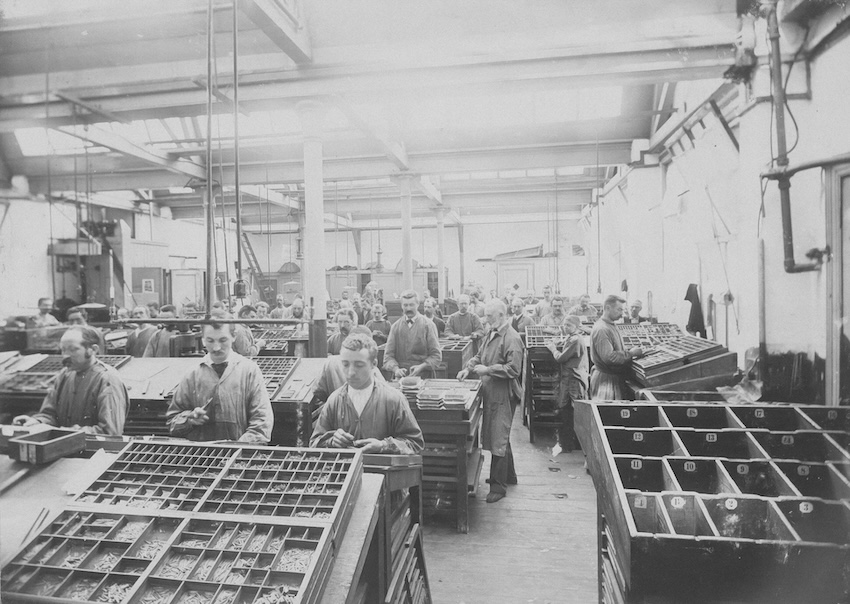
On the morning of 8 August 1956, men descended into the Bois du Cazier coal mine in Marcinelle, a working-class town near Charleroi in southern Belgium. Among them were many Italians, who had arrived from across the country, from villages in Abruzzo, Sicily and Veneto. Some had been in Belgium for only a few months; others had spent years working underground, chasing the promise that post-war Europe seemed to offer its labourers: a wage, stability and a future.
Instead, they entered one of the deadliest industrial disasters in European history.
A fire broke out deep inside the mine after a mechanical failure. Smoke and carbon monoxide spread rapidly through the shafts. Rescue teams worked for days. Families waited outside the gates. When the last bodies were recovered, 262 miners were dead. Among them were 136 Italians. Only a handful of workers survived. The phrase that came to symbolise the tragedy — tutti cadaveri, “all corpses” — still resonates in Italy seventy years later.
Marcinelle became a turning point. It exposed the reality behind Europe’s post-war labour miracle. The coal that powered factories, heated homes and fuelled economic growth came at a human cost. Migrant workers, many recruited through bilateral agreements between Italy and Belgium, were often sent into dangerous jobs that local workers increasingly refused to do. The disaster forced governments to confront questions about safety, labour rights and the value assigned to migrant lives. Yet Marcinelle was not an isolated episode.
Nine years later, on 30 August 1965, another catastrophe struck. At Mattmark, in the Swiss Alps, a massive section of the Allalin glacier collapsed onto a construction site where workers were building a hydroelectric dam. Eighty-eight Italians died. Once again, the victims were men who had crossed borders in search of work. Once again, families received telegrams instead of wages. Once again, economic progress left a trail of grief behind it.
These tragedies occupy a central place in the collective memory of Italian migration. Monuments were erected. Commemorations were organised. Politicians delivered speeches. Names were engraved in stone. But what about those whose suffering never produced a headline? What about the miner who survived Marcinelle only to die decades later from lung disease? The labourer who spent years in a foreign country without ever learning the language? The worker who endured discrimination, loneliness and separation from family but whose struggles never entered any official archive?
The history of migration is often written through spectacular disasters. Yet much of its human cost has always been quieter.
Today, European workers are far less likely to die in a mining accident than they were in the 1950s. Safety regulations have improved dramatically. Labour inspections are stronger. The coal mines that once attracted thousands of Italian migrants have largely disappeared. Still, physical dangers of migrant labour do not belong solely to the past. Across Europe, migrant workers remain overrepresented in some of the most hazardous sectors of the economy, from agriculture and construction to logistics and food processing. Workplace accidents, heat-related illnesses, unsafe housing and labour exploitation continue to claim lives every year.
Italy itself offers a stark reminder. In recent years, the deaths of migrant farmworkers labouring under the caporalato system have exposed conditions that many believed belonged to another era. Men recruited to harvest tomatoes, oranges and other agricultural products have collapsed after working long hours in extreme heat, often living in informal settlements and enduring conditions that would be unacceptable in most other sectors of the economy. Their deaths rarely become international symbols in the way Marcinelle did. They do not inspire monuments or state ceremonies. Yet they reveal a continuity that is impossible to ignore.
The vulnerabilities that shaped the lives of migrant workers have not vanished. They have evolved.
Physical exploitation persists, but growing attention is now being paid to another dimension of migrant labour that has long remained overlooked: psychological wellbeing. The contemporary migrant worker may still face dangerous working conditions. But alongside those risks come pressures that are less visible and often harder to measure: precarious employment, social isolation, discrimination, language barriers, family separation and chronic uncertainty about the future.
The World Health Organization has repeatedly identified migrants as a population exposed to multiple risk factors for poor mental health. Those risks accumulate before migration, during the journey and after arrival in the host country. Economic insecurity, weak social networks and limited access to healthcare can all contribute to depression and anxiety. Migrants often face these pressures simultaneously.
These figures are striking not because they reveal something entirely new, but because they quantify a reality that migrants have described for generations. The language has changed. In the 1950s, workers spoke of homesickness, exhaustion and nerves. Today we speak of anxiety disorders, depression and burnout. The underlying experience is often remarkably similar.
Belgium itself offers an interesting example. The country that once relied on Italian miners is now home to a highly diversified labour market that depends on migrant workers in healthcare, logistics, construction, agriculture and services. Yet concerns about psychological wellbeing extend far beyond migrant communities. Recent studies suggest that roughly one in three Belgian workers is at risk of burnout or severe work-related stress.
For migrants, those pressures can be amplified.
A worker who has left family members thousands of kilometres away may have fewer support systems. Someone navigating an unfamiliar bureaucracy may struggle to access healthcare. Language barriers can make psychological distress harder to recognise and even harder to treat. Research across Europe continues to show that migrant populations often encounter obstacles when seeking healthcare, including mental health services.
This is the hidden continuity between Marcinelle and the present.
The physical dangers that once defined migrant labour have not disappeared. In many sectors they remain a daily reality. What has changed is our understanding of the costs of migration. Alongside workplace injuries, exploitation and dangerous working conditions, researchers, policymakers and health professionals are increasingly paying attention to the psychological burden carried by migrant workers. The challenge is not to replace one narrative with another. It is to recognise that physical and mental suffering are often intertwined.
Long working hours, economic insecurity, discrimination, poor housing, social isolation and uncertainty about the future do not merely affect productivity. They shape mental health in profound ways.
The stories emerging from migrant communities across Europe often revolve around isolation rather than explosions; exhaustion rather than cave-ins. Unlike industrial disasters, contemporary struggles rarely produce a single dramatic moment that captures public attention. Yet they are not entirely invisible.
From the deaths of migrant farmworkers during heatwaves in southern Italy to recurring reports of exploitation in agriculture, logistics and construction across Europe, reminders of the human cost of migration continue to surface. The difference is that these events are often treated as isolated incidents rather than symptoms of a broader structural problem. There is no single siren. No defining image. No national day of mourning. Instead, there are sleepless nights, panic attacks, antidepressant prescriptions, untreated trauma and conversations that never happen because mental illness remains stigmatised in many communities.
The tragedy unfolds in slow motion.
This is why commemorations such as Marcinelle matter beyond their historical significance. They remind us that migration has never been solely an economic phenomenon. It has always involved bodies and minds, hopes and fears, risks and sacrifices.
When Italians arrived in Belgium after the Second World War, they were often viewed as disposable labour. In contemporary Europe, migrants are celebrated as essential workers, particularly in sectors facing labour shortages. Yet being essential does not automatically mean being protected.
The question raised by Marcinelle remains relevant seventy years later. How much suffering are societies willing to tolerate when it occurs at the margins of visibility?
In 1956, the answer could be measured in miners’ bodies recovered from underground galleries. In 2026, the answer may be found elsewhere: in the continued deaths of exploited workers, in rising levels of depression and burnout, and in the psychological distress experienced by millions of people whose labour sustains European economies but whose wellbeing often remains an afterthought.
The mines of Marcinelle have long fallen silent. The memorials stand preserved. Tourists walk through the former industrial site and read the names of the dead. But if the history of migration teaches anything, it is that danger evolves. The call for Europe today is not only to remember those who died beneath the earth. It is to recognise the suffering of those who survive above it.